As we saw in Part 1 of this story, there are many theories on the real identity of Jack the Ripper doing the rounds, which range from the hypothetically plausible to the palpably absurd. Delving a little deeper, it is interesting to note how many of the suspects suggested over the years involve highly respected figures from the very top of Victorian society. Perhaps this should not be entirely surprising, as there is a strong and distinct social element in the Jack the Ripper story and its lasting emotional resonance. The Ripper scandal drew attention to the squalor and abject poverty of the East End of London where the murders took place, and the extreme inequalities that riddled complacent Victorian society. Recently uncovered census records have revealed that in 1881 (7 years before the murders took place) several of the Ripper’s victims were living with husbands and families. Presumably, in the years before 1888, these marriages must have disintegrated, with consequences for the abandoned women that eventually led them into prostitution.
There is a case to be made that part of the outrage over the murders was (and is) prompted not just by the barbarity of the acts themselves, but also by a feeling of shared guilt, that society as a whole could allow fellow human beings to fall so low and be forced into such dangerous and degrading means of survival. In this version of the narrative, it is fitting that many should seek to cast the grandees of Victorian Society in the role of Jack the Ripper. The story seems to work better (and certainly have more moral impact) if the Ripper was socially the polar opposite of his victims, his calculated murders being only an extreme, twisted version of polite society’s cold indifference. This perspective on events has developed over time. Contemporary suspects more often than not lived amongst, and in similar conditions to, their supposed victims, and included many immigrants, and known domestic murderers. As time has passed, however, new information on the always shifting, historically invisible community of Whitechapel has become harder and harder to obtain, necessitating perhaps a shift away from simple homicide on a human, local scale, and towards grand conspiracy theories and elaborate whodunit yarns, with ever more unlikely culprits.
Given this line of investigation, there could be no more perfect candidate for Jack than a royal, and it so happens that the contemporary royal brood had a black sheep who could quite easily be made to fit the bill, and has been the subject of not one but three distinct Ripper theories. Prince Albert Victor (always known as Eddy) was grandson to Queen Victoria and son of Prince Albert Edward, and as such stood to inherit the throne on the death of his father. But somehow, even amongst the Hanoverians (for whom spectacularly fractured and unhappy families were something of a tradition), Eddy seems particularly awkward, never quite fitting the role he was destined to play. He was an odd, listless character. Opinions vary over his lack of intelligence, but the argument is only over its extent not its existence, with assessments ranging from his tutor’s report that his mind was ‘abnormally dormant’, to persistent but unverified rumours that he had learning disabilities. Lack of intelligence was, however, no impediment to a young prince gaining admission to Cambridge, and he was helpfully excused from examinations during his time there from 1883 to 85.

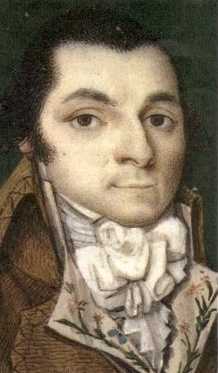
Prince Albert Victor (Eddy). What secrets are hidden by that impeccably moustachioed smile?
As he entered adulthood, Eddy found himself in the unusual position of being simultaneously renowned as a ladies man and reviled as a homosexual. In 1889, his name became involved in the Cleveland Street Scandal, in which it emerged that several high-profile figures (including an Equerry to the Prince of Wales) were clients at a male brothel. All homosexual acts between men were illegal at this time, and punishable by up to two years’ imprisonment with hard labour, so these were serious accusations. However, it seems there was no evidence linking Eddy to the establishment, and his name was probably only thrown into the mix to distract attention from those who had actually been involved. Keen to avoid a scandal (having already created quite enough of his own), Eddy’s father stepped in to make the matter go away, effectively ending the investigation into the affair. This ultimately seems to have done more harm than good, the cover-up encouraging gossips to believe that Eddy did in fact have something to hide. Certainly, whispers of homosexuality (which seem to have very little grounding other than this case) have clung to him ever since.
Like his father, it seems Eddy also had dalliances with a string of women, leading to other scandals, including Margery Haddon’s (almost certainly false) claim that he was the father of her son, and subsequent blackmailing by the ’son’ himself. In 1891, he was also blackmailed by two prostitutes who claimed to be in possession of compromising letters written in his hand. Though these claims, too, are now thought to have been fraudulent, there is little doubt that Eddy had his fair share of amatory adventures, and it is has been widely claimed that at some stage he contracted a venereal disease, possibly gonorrhoea.
The increasingly vexed question of Eddy’s eminent unsuitability to ever assume the crown was abruptly resolved in 1892, when he died, suddenly. The cause of death was officially recorded as influenza, though the shocking timing of his death, aged just 28, has prompted further conspiracy theories that he was poisoned, or pushed off a cliff, or that his death was faked in order to remove him from the succession.
Mix all of these elements together and you have a stew whose peppery aromas would attract any Young Turk looking to make his mark and his fortune on the Jack the Ripper scene. Although there is no evidence of anyone making the connection at the time of the murders, Eddy has subsequently become the linchpin of several theories.
Theory One: The Lone Madman
This theory, originally popularised by Dr Thomas Stowell in 1970, did not name Eddy directly, but there is enough evidence in his explanation to make it clear who he is referring to. According to this account, Eddy was suffering from syphilis, exotically contracted in the West Indies, which drove him mad and set him on the murderous course of Jack the Ripper. The royal family is said to have known that Eddy was the killer from at least the second murder, but did not act until after the fourth, when he was locked away in an asylum. He somehow escaped to murder Mary Jane Kelly, at which point he was re-interred and died of ’softening of the brain’ in a private mental hospital at Sandringham.
Stowell died shortly after publishing this theory, and his papers were destroyed by his family. This has made many elements of the story impossible to substantiate. More damagingly, official records show that Eddy was not in London on the murder dates (but then, they would do, wouldn’t they?).
The theory was elaborated by Frank Spiering, who claimed to have seen notes of royal physician Sir William Gull, in which he described hypnotising Eddy and watching in horror as he acted out the Ripper murders. When the New York Academy of Medicine, Spiering’s stated source for this material, claimed that it had no such records, Spiering went on to challenge the Queen to throw open the royal archives and publicly reveal the truth about Eddy’s murderous secret. When the royal household said they would gladly allow Spiering access to the archives (as they will to anyone who applies), Spiering stroppily replied that he didn’t want to see the files anyway, so there.
Bunkometer Rating: A theory which, aside from being based on a paper trail which no-one can prove exists, seems to offer no tangible connection between Eddy and the murders, other than that he had a sexually transmitted disease and therefore must have despised all women madly, and killed a string of them. Codswallop.
Theory Two: Eddy As Jack’s Muse

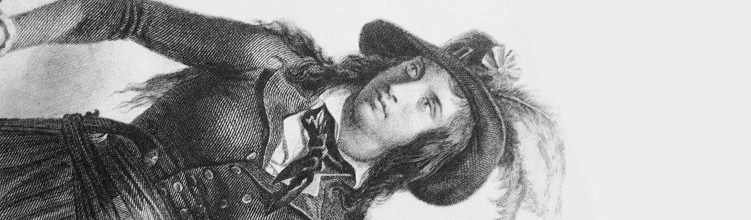
James Kenneth Stephen
Accepting that the idea of Eddy as Jack the Ripper has colander-level water-holding abilities, but unwilling to leave him out of the story entirely, another theory has emerged with Eddy the unlikely inspiration for enough searing sexual jealousy to fuel the fires of history’s most infamous serial killer. This theory, advocated by Michael Harrison, centres around James Kenneth Stephen, a poet, and Eddy’s tutor at Cambridge (as well as cousin of Virginia Woolf).
Stephen was undoubtedly an unusual character, and any hint of being a little bit odd is blood in the water for your second-rate Ripper researcher. It is undeniable that some of Stephen’s poetry did contain a misogynistic streak. Take, for example, his poem In the Backs, which contains the following lines about a woman he comes across and takes an instant disliking to,
…I do not want to see that girl again:
I did not like her: and I should not mind
If she were done away with, killed, or ploughed.
She did not seem to serve a useful end :
And certainly she was not beautiful.
Chilling words, certainly, but is it any more than poetic hyperbole? Harrison certainly seems to think so. According to his version of events, Stephen fell passionately in love with Prince Eddy during his time at Cambridge, and Eddy initially responded to his advances, entering into a sexual relationship. Soon though, Eddy grew tired of Stephen, and took the excuse of his enrolment in the army to end the affair. Less controversially, two years later Stephen suffered a brain injury, as a result of either being hit by an object falling from a moving train, or far more romantically being thrown by his horse into the spinning vane of a windmill. Thus began a period of mental deterioration, culminating, says Harrison, in complete insanity.
Enraged by Eddy’s widely rumoured flings with women, whom he clearly lusted after in a way Stephen had never been able to inspire, Stephen determined to take his revenge on an entire gender by committing the Ripper murders. Precisely why Stephen should pick these East End prostitutes as way of hurting Eddy is not fully explained.
Bunkometer Rating: This theory seems to be based on the apparently groundless belief in Eddy and Stephen’s homosexuality, and yet again relies on an implied and murky, yet clearly direct and unswayable, relationship between sex, madness and the murder of prostitutes. In going to far greater lengths to establish the suspect’s immorality and strangeness than any direct link to the murders, it’s as if the author is suggesting that, in effect, the former proves the latter. Crapola.
Theory Three: The Royal Conspiracy
Everyone likes a conspiracy, and this one is so juicy that it has gained a lot of ground in recent decades, and has frequently been portrayed in television, film and popular books.
Based on the claims of Joseph Gorman, this version of events holds that Eddy secretly married and had a child with a Alice Mary Crook, a Catholic shop assistant (of all things!) in the East End. On hearing of this brewing scandal, the royal family, including Victoria herself, formed an unholy alliance with (you guessed it) the Freemasons to cover up the awful mess. Key figures, including Lord Salisbury and, yet again, royal physician Sir William Gull, masterminded a plot to eliminate everyone who knew about Eddy’s child, and at the same time send a powerful coded message, broadcasting the abiding power of the freemasonry. For some reason, the motley crew stopped short of killing Alice, instead whisking her off to an asylum where Gull conducted experiments on her to make her forget what had happened, and plunge her into lunacy.
Bunkometer Rating: Balderdash! Eddy plays only a supporting role in this one, his accepted profligacy making him a suitable donor of the wild royal oats needed to get this potboiler going. There are several gaping holes here: notably why was Alice not murdered, and how is it that the covering up of this ripe rumour only necessitated the killing of five women, all of them prostitutes? The final nail in the coffin should have been Joseph Gorman’s later admission that he had made the whole thing up, but the rumour is out in the wild now, and seemingly unstoppable.
What all of this seems to suggest is that the British, as affectionate as many of them are towards the royal family, take only a very little prompting to believe that this august and ancient institution has a dark, rotten heart, and a mind programmed entirely differently from our own. The fact that such flimsy theories, contradictory of each other and often of themselves, have gained any currency at all reflect our willingness to see the royals as characters in the vividly painted, infinitely flexible story of history rather than as fellow human beings, operating in a unique but real set of social circumstances. But then, we needn’t have looked to history to highlight that.
Anyone for another Diana enquiry?
Further Reading
Marie Antoinette and her Children: The queen’s adopted family
From the day she arrived at Versailles at the age of only fourteen, one question loomed larger in the life of Marie Antoinette than any other. Versailles was so used to gossip that Whisper was practically its official language, but amidst the idle wagging of tongues and scurillous muck-raking, this question had extremely serious consequences not just for the young Dauphine and Dauphin, but also for the Court, the country and the future of European politics.
Why wasn’t Marie Antoinette pregnant?
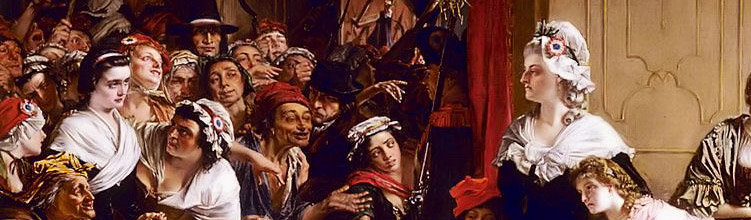
Doubts began to germinate on the morning after the young royal couple’s first night together, when their sheets were examined (‘privacy’ being an entirely foreign concept at the palace) and nothing, clearly, had taken place. Weeks turned to months, months to years, and nothing changed. Pressure mounted. Marie Antoinette’s mother, the awesome Empress Maria Theresa of Austria, kept up an unending barrage of questions and criticism on the subject by letter. Every month, messengers raced across the continent to inform the Empress on the coming of Marie Antoinette’s periods, and her continued, growing failure as a Dauphine. The market women of Paris, taking advantage of their peculiar right of access to Versailles, confronted Marie Antoinette directly, demanding of her when she would give France what it needed. Finally, Marie Antoinette’s brother, the Emperor Joseph II was dispatched on what must have been a mortifying visit to Versailles for the young girl, in which he spoke frankly with Marie Antoinette and Louis about the ins and outs of royal duty.
Opinions differ on the precise cause of the delay and its possible physical or psychological components. Essentially though, the problem boiled down to the extreme awkwardness of two people who were by our standards very young and, by nature, shy. Louis especially suffered from an almost crippling lack of confidence and a pronounced sense of his own inferiority. Knowing, as they did, that every detail of whatever happened between them in that vast and imposing royal bed was being talked about – laughed about – by all of Europe, it is unsurprising that intimacy took time to develop.
And though hosts of people seemed to think Marie Antoinette needed constant reminders about the importance of this particular duty, it seems unlikely that anyone felt more strongly about the situation than she did. All commentators on the girl agreed that she had a deep and genuine love of children, which must only have been given added heat by her own inability to become a mother. When the Duchesse de Chartres gave birth to a stillborn child, Marie Antoinette wrote, poginantly, that she would have been happy to have given birth to any child, even a dead one.
Finally, Marie Antoinette delivered her first child, Marie Thérèse, in 1778 – eight long years after her arrival in France. But even before this momentous event took place, it would not be entirely accurate to describe Marie Antoinette as ‘childless’. For though she may not have had children of her own, she became guardian, even mother, to a surprising number of adopted children. This is a topic which many of Marie Antoinette’s recent biographers have overlooked or glossed over, but it is an area that sheds important new light on her character.
From very early on at Versailles, Count Mercy (an Austrian minister charged by Maria Theresa to keep Marie Antoinette in line) complained that the Dauphine kept almost constant company with a 5-year-old boy, the son of her chief femme de chambre, the evocatively named Madame de Misery. Soon, de Misery’s 12-year-old daughter joined in the fun, coming to live with Marie Antoinette. This happy arrangement came to an end following complaints over their extremely noisy games, and the resulting torn clothes and broken furniture. Though stories such as this one were gifts to those who wished to portray Marie Antoinette as empty-headed, frivolous and immature, it is worth remembering that Marie Antoinette, at only fifteen, was pretty close in age to the 12-year-old girl. It is true that her own childhood, during which she was never expected to fill the pivotal role of Dauphine, had included at best a patchy education, and only last-minute attempts at preparing her for the task ahead. She certainly was not ready to engage with adults on their level, especially such forceful personalities as the Royal Aunts, and representatives of the other factions at Versailles which sought to win her favour. Though Marie Antoinette’s retreat into childish behaviour during her early days at Versailles was an extreme reaction, it is in many ways an understandable one.
On another occasion, it is said that Marie Antoinette was travelling in her carriage when the horses ran into a young boy. He was, miraculously, uninjured, but the queen held him in her arms and (so legend has it) declared ‘I must take him. He is mine’. Handily, it turned out that the boy’s mother had died, and his grandmother willingly agreed. He was whisked away to Versailles, and his whole family was placed under royal protection. The boy (called Jacques or Armand, depending on the version of the story) was cared for by Marie Antoinette, who often shared her food with him. His brother Denis was provided with a thorough musical education, becoming Cellist to the King in 1787. Marie Antoinette is even said to have found a way to send Denis money to allow him to embark on his promising musical career after the monarchy fell. Armand’s two sisters were provided with a regular allowance and, according to the marriage contract of one of them, were left a large sum of money following Marie Antoinette’s death.
Armand stayed with the queen until the birth of Marie Thérèse, when he was sent to continue his education, still funded by Marie Antoinette. The tale, however, does not end there, and when the Revolution began, Armand apparently rebelled against his adopted mother, becoming an ardent revolutionary, joining the armies of the Repbulic and dying, heroically, in battle.
Something has always struck me as a little odd about this story – perhaps it’s the lack of clear, reliable sources for the information, perhaps it’s because so few biographers have made much of what is by any standards a remarkable incident in the life of Marie Antoinette. It has something of the ring of those delicious, intoxicating rumours that Marie Antoinette inspired – a young peasant boy, as good as kidnapped by the childless Queen, scrubbed, dressed up and paraded around the gilded palace, given everything he needs, but who ultimately bites the hand that has fed him so richly. But there is enough evidence both in the story itself and when set in the context of Marie Antoinette’s known history of adopting children to suggest that at least the basics of this story are correct, and these children should rightly be considered a part of Marie Antoinette’s extended family of foundlings.
This family did not stop growing even when Marie Antoinette at last began having her own children. Madame Royale, as Marie Thérèse was known, was a famously difficult child, and it was perhaps in an attempt to soften her intractable character that Marie Antoinette provided her with a companion, in the shape of Marie Phillippine Camriquet, the daughter of one of Madame Royale’s maids. Renamed Ernestine for her new role, the girl initially spent her days with Marie Thérèse before returning to her parents at night. However, when her mother died in 1788, Ernestine was moved into Marie Thérèse’s apartments, and given an almost identical room to the princess. She wore similar clothes and took lessons alongside Marie Thérèse.
Marie Antoinette seems to have been particularly sensitive to the thought of any child being orphaned, and it was usually the impulse to take care of such children that prompted her to bring them into her household. On hearing of the death of one of Louis’ gentlemen ushers and his wife, leaving three orphan girls, it is said that Marie Antoinette immediately declared (much as she had done with Armand) ‘I adopt them!’. The two eldest girls were placed in a convent, but Jeanne Louise Victoire (at 3, the same age as the Dauphin) was installed in the royal apartments and renamed Zoë. She became the companion for the Dauphin Louis-Charles.
In 1787, Marie Antoinette was presented with an unusual gift from the famous traveller Chevalier de Boufflers, who had recently returned from Senegal. He offered the Queen a parrot (to join the vast and rowdy crew of pets that already terrorised Versailles) and a young Senegalese boy. Normal practice at the time would have been to dress the boy up and take him into service (much like the boy pictured in the above painting), but on this occasion Marie Antoinette had him baptised and renamed Jean Amilcar, and instructed one of her houseboys to look after him.
All three of these children remained with Marie Antoinette as the royal family was ousted from Versailles in October 1789, and moved to the Tuileries Palace in Paris. At this point, Jean Amilcar was placed in an institution for children at Saint-Cloud, and Marie Antoinette sent monthly payments to provide for his upkeep. When she was moved from the Tuileries to much tighter imprisonment at the Temple, she was unable to keep up these payments, whereupon it was said that the boy was cast out by the charity, and he starved to death on the streets.
Before the royal family’s attempted escape from the Tuileries in 1791 (which ended in failure at Varennes, and their forced return to Paris), Zoë was sent to join her older sisters at the Convent. Though Ernestine was also dispatched to her father in Versailles for the escape, she returned to rejoin the family following its failure, and only finally left the royal family when the Tuileries was invaded and the family forced to flee to the National Assembly in August.
Ernestine’s father was guillotined during the Terror, but Ernestine herself survived. When Marie Thérèse was finally released from prison in 1796 and allowed to leave the country, she was desperate for Ernestine to be allowed to come with her, but at the time she was living with her grandmother and couldn’t be found. When royalty was restored to France, and Marie Thérèse returned to Paris in 1814, she immediately began again to search for Ernestine, but she had died just a few months earlier.
So, have historians and biographers been too diverted, as indeed contemporaries were, by the question of the missing heir? I think so, and in doing so we’ve missed out on a wider picture of the royal family, and a more subtle understanding of Marie Antoinette. This adopted family was deliberately and continually, if impulsively, constructed. It lasted even into the difficult days of the Tuileries and was maintained financially, long after doing so became difficult and dangerous. Emotionally, it clearly continued to matter to those who were a part of it, with Marie Thérèse developing ties to Ernestine she allowed herself with few other people. Here’s hoping that this foundling family will soon get the research and attention it deserves.
Of all the biographies I’ve come across, this offers the best information on this subject, and was the main source for this article. Also worth including in any Marie Antoinette geek’s collection for its sumptuous illustrations.
Great blog centring around Marie Antoinette and Versailles, which pointed me in the direction of the above book.
The best overall biography of Marie Antoinette, and the one that comes the closest to giving the reader a sense of what this immensely woman might actually have been like. I met Antonia Fraser recently, and babbled like a fool.