History, with more Jumpy Bits: are video games a new avenue for history?

Assassins Creed 2

There was an article in Literary Review recently, in which DJ Taylor bemoaned the state of publishing and the literary world in general, culminating in the conclusion that

reading a book is, by and large, a more valuable and more rewarding activity than watching a film, laughing at a stand-up comedian or hunkering down over one’s Xbox.*

I’ve never agreed with smug generalisations about reading that seek to cast it as necessarily and automatically more edifying than other activities, and this sort of snobbery is almost always indulged in by people who have very little actual experience of the cultural forms they dismiss.

What’s more, I’ve recently had some experiences whilst hunkered down over one’s Xbox that have made me think we might be on the brink of a whole new way of experiencing video games and, in particular, whole new ways of uniting games with history.

The game that prompted these thoughts was Ubisoft’s Assassin’s Creed II, in which the player takes on the role of Ezio Auditore da Firenze, the titular assassin/heart-throb living in Renaissance Italy. I’ve been playing games for more than 15 years, and I can’t remember playing any that fired my historical imagination like this one. That’s not to say there haven’t been games that dealt very directly with history. There was JFK:Reloaded, for example, the controversial game which challenged players to recreate the official version of events at the Kennedy assassination, and offered a large cash prize to the person that came closest to matching the fatal shots from the window of the Book Depository. There have also been games like the Civilisation series, which, while not directly historical, encouraged players to think about historical processes such as creating societies and building empires. But none of these can rival Assassins Creed II’s stab at realising its historical setting, making it more than just a backdrop, but a living, breathing, accurate world

The game includes lush, atmospheric recreations of Florence, San Gimignano, Forlì and Venice. As well as its fictional protagonist, the plot revolves around real world figures, including the Medici family. The player is also frequently provided with pretty detailed historical information, with engaging, often witty details on everything from the social role of prostitutes and doctors and biographies of key Renaissance figures to backgrounds on the different districts of Venice you can explore.

Alright, so these are the historical plus points, and the game also includes an increasingly ridiculous sub-Dan Brown Assassin/Templar plotline, and implausible cameos from Leonardo DaVinci and Machiavelli. Some of the dialogue is historically unconvincing, with onlookers occasionally commenting ‘His mental health is questionable!’ as you storm about the streets. There are also interminable, unnecessary Tomb Raider style platform sections, which are a nightmare if you like me were literally born with hams for fists. I am not by any means arguing that Assassins Creed II is historically perfect, or that it goes nearly as far as it could. But it does reveal that games and history could have a future together, and a bright and exciting one at that. Technology has reached the point where both people and locations can be presented with real life in them, and extraordinary amounts of detail. By far my favourite section of the game is early on, when Ezio is still in Florence and the plot has yet to embark on its more outlandish flights of fancy. Here, Florence feels lived in, real. It feels like a place you’ve not been to before but want to learn more about. And the bitter feuds of the Medici family and their enemies seem to simmer all around.

This game got me excited about Renaissance Italy, a period I know very little about. It introduced me to astonishing figures, for example Caterina Sforza, and their stories. Gaming, traditionally, has been far more interested in the future than the past, so I can’t help but feel if games like Assassin’s Creed II introduce more people like me to previously familiar parts of history, and make them want to learn more, then that in itself is of great value.

And this could just be the beginning. 8 million people have bought this game around the world – a figure most historians will never come close to achieving. This raises the tantalising possibility that there is a market for historical games, that go a little deeper and rely on the history itself to power their storylines, trusting that history done well and responsibly can create hugely immersive, engaging worlds. Leaving all snobbery aside, can there be any more exciting prospect for anyone who loves history than to wonder around in the worlds of the past, talking to the people that inhabit them? I think the best comparison for where historical games might go is the historical novel, except of course with much more interactivity for the player, and the ability to make your own choices.

So, Mr DJ Taylor, lay off the Xbox for a while and let’s see what it can do, because I’ve got my fingers crossed that a new method not for studying but for enjoying history might be waiting to emerge.

*You may think that starting an anti-snobbery argument by throwing in a quote from Literary Review is in itself a touch snobby. If you think this, you are wrong, and I am better than you.

Posted in Games, History, Popular History | Tagged , , , | Leave a comment

Queen Victoria’s Black Sheep: Prince Eddy and the Ripper Rumours, Part 2

Prince Albert Victor 'Eddy'

As we saw in Part 1 of this story, there are many theories on the real identity of Jack the Ripper doing the rounds, which range from the hypothetically plausible to the palpably absurd. Delving a little deeper, it is interesting to note how many of the suspects suggested over the years involve highly respected figures from the very top of Victorian society. Perhaps this should not be entirely surprising, as there is a strong and distinct social element in the Jack the Ripper story and its lasting emotional resonance. The Ripper scandal drew attention to the squalor and abject poverty of the East End of London where the murders took place, and the extreme inequalities that riddled complacent Victorian society. Recently uncovered census records have revealed that in 1881 (7 years before the murders took place) several of the Ripper’s victims were living with husbands and families. Presumably, in the years before 1888, these marriages must have disintegrated, with consequences for the abandoned women that eventually led them into prostitution.

There is a case to be made that part of the outrage over the murders was (and is) prompted not just by the barbarity of the acts themselves, but also by a feeling of shared guilt, that society as a whole could allow fellow human beings to fall so low and be forced into such dangerous and degrading means of survival. In this version of the narrative, it is fitting that many should seek to cast the grandees of Victorian Society in the role of Jack the Ripper. The story seems to work better (and certainly have more moral impact) if the Ripper was socially the polar opposite of his victims, his calculated murders being only an extreme, twisted version of polite society’s cold indifference. This perspective on events has developed over time. Contemporary suspects more often than not lived amongst, and in similar conditions to, their supposed victims, and included many immigrants, and known domestic murderers. As time has passed, however, new information on the always shifting, historically invisible community of Whitechapel has become harder and harder to obtain, necessitating perhaps a shift away from simple homicide on a human, local scale, and towards grand conspiracy theories and elaborate whodunit yarns, with ever more unlikely culprits.

Given this line of investigation, there could be no more perfect candidate for Jack than a royal, and it so happens that the contemporary royal brood had a black sheep who could quite easily be made to fit the bill, and has been the subject of not one but three distinct Ripper theories. Prince Albert Victor (always known as Eddy) was grandson to Queen Victoria and son of Prince Albert Edward, and as such stood to inherit the throne on the death of his father. But somehow, even amongst the Hanoverians (for whom spectacularly fractured and unhappy families were something of a tradition), Eddy seems particularly awkward, never quite fitting the role he was destined to play. He was an odd, listless character. Opinions vary over his lack of intelligence, but the argument is only over its extent not its existence, with assessments ranging from his tutor’s report that his mind was ‘abnormally dormant’, to persistent but unverified rumours that he had learning disabilities. Lack of intelligence was, however, no impediment to a young prince gaining admission to Cambridge, and he was helpfully excused from examinations during his time there from 1883 to 85.

Prince_Albert_Victor,_Duke_of_Clarence_(1864-1892)_by_William_(1829-18_)_and_Daniel_Downey_(18_-1881

Prince Albert Victor (Eddy). What secrets are hidden by that impeccably moustachioed smile?

As he entered adulthood, Eddy found himself in the unusual position of being simultaneously renowned as a ladies man and reviled as a homosexual. In 1889, his name became involved in the Cleveland Street Scandal, in which it emerged that several high-profile figures (including an Equerry to the Prince of Wales) were clients at a male brothel. All homosexual acts between men were illegal at this time, and punishable by up to two years’ imprisonment with hard labour, so these were serious accusations. However, it seems there was no evidence linking Eddy to the establishment, and his name was probably only thrown into the mix to distract attention from those who had actually been involved. Keen to avoid a scandal (having already created quite enough of his own), Eddy’s father stepped in to make the matter go away, effectively ending the investigation into the affair. This ultimately seems to have done more harm than good, the cover-up encouraging gossips to believe that Eddy did in fact have something to hide. Certainly, whispers of homosexuality (which seem to have very little grounding other than this case) have clung to him ever since.

Like his father, it seems Eddy also had dalliances with a string of women, leading to other scandals, including Margery Haddon’s (almost certainly false) claim that he was the father of her son, and subsequent blackmailing by the ’son’ himself. In 1891, he was also blackmailed by two prostitutes who claimed to be in possession of compromising letters written in his hand. Though these claims, too, are now thought to have been fraudulent, there is little doubt that Eddy had his fair share of amatory adventures, and it is has been widely claimed that at some stage he contracted a venereal disease, possibly gonorrhoea.

The increasingly vexed question of Eddy’s eminent unsuitability to ever assume the crown was abruptly resolved in 1892, when he died, suddenly. The cause of death was officially recorded as influenza, though the shocking timing of his death, aged just 28, has prompted further conspiracy theories that he was poisoned, or pushed off a cliff, or that his death was faked in order to remove him from the succession.

Mix all of these elements together and you have a stew whose peppery aromas would attract any Young Turk looking to make his mark and his fortune on the Jack the Ripper scene. Although there is no evidence of anyone making the connection at the time of the murders, Eddy has subsequently become the linchpin of several theories.

Theory One: The Lone Madman

This theory, originally popularised by Dr Thomas Stowell in 1970, did not name Eddy directly, but there is enough evidence in his explanation to make it clear who he is referring to. According to this account, Eddy was suffering from syphilis, exotically contracted in the West Indies, which drove him mad and set him on the murderous course of Jack the Ripper. The royal family is said to have known that Eddy was the killer from at least the second murder, but did not act until after the fourth, when he was locked away in an asylum. He somehow escaped to murder Mary Jane Kelly, at which point he was re-interred and died of ’softening of the brain’ in a private mental hospital at Sandringham.

Stowell died shortly after publishing this theory, and his papers were destroyed by his family. This has made many elements of the story impossible to substantiate. More damagingly, official records show that Eddy was not in London on the murder dates (but then, they would do, wouldn’t they?).

The theory was elaborated by Frank Spiering, who claimed to have seen notes of royal physician Sir William Gull, in which he described hypnotising Eddy and watching in horror as he acted out the Ripper murders. When the New York Academy of Medicine, Spiering’s stated source for this material, claimed that it had no such records, Spiering went on to challenge the Queen to throw open the royal archives and publicly reveal the truth about Eddy’s murderous secret. When the royal household said they would gladly allow Spiering access to the archives (as they will to anyone who applies), Spiering stroppily replied that he didn’t want to see the files anyway, so there.

Bunkometer Rating: A theory which, aside from being based on a paper trail which no-one can prove exists, seems to offer no tangible connection between Eddy and the murders, other than that he had a sexually transmitted disease and therefore must have despised all women madly, and killed a string of them. Codswallop.

Theory Two: Eddy As Jack’s Muse

James Kenneth Stephen - Jack the Ripper?

James Kenneth Stephen

Accepting that the idea of Eddy as Jack the Ripper has colander-level water-holding abilities, but unwilling to leave him out of the story entirely, another theory has emerged with Eddy the unlikely inspiration for enough searing sexual jealousy to fuel the fires of history’s most infamous serial killer. This theory, advocated by Michael Harrison, centres around James Kenneth Stephen, a poet, and Eddy’s tutor at Cambridge (as well as cousin of Virginia Woolf).

Stephen was undoubtedly an unusual character, and any hint of being a little bit odd is blood in the water for your second-rate Ripper researcher. It is undeniable that some of Stephen’s poetry did contain a misogynistic streak. Take, for example, his poem In the Backs, which contains the following lines about a woman he comes across and takes an instant disliking to,

…I do not want to see that girl again:
I did not like her: and I should not mind
If she were done away with, killed, or ploughed.
She did not seem to serve a useful end :
And certainly she was not beautiful.

Chilling words, certainly, but is it any more than poetic hyperbole? Harrison certainly seems to think so. According to his version of events, Stephen fell passionately in love with Prince Eddy during his time at Cambridge, and Eddy initially responded to his advances, entering into a sexual relationship. Soon though, Eddy grew tired of Stephen, and took the excuse of his enrolment in the army to end the affair. Less controversially, two years later Stephen suffered a brain injury, as a result of either being hit by an object falling from a moving train, or far more romantically being thrown by his horse into the spinning vane of a windmill. Thus began a period of mental deterioration, culminating, says Harrison, in complete insanity.

Enraged by Eddy’s widely rumoured flings with women, whom he clearly lusted after in a way Stephen had never been able to inspire, Stephen determined to take his revenge on an entire gender by committing the Ripper murders. Precisely why Stephen should pick these East End prostitutes as way of hurting Eddy is not fully explained.

Bunkometer Rating: This theory seems to be based on the apparently groundless belief in Eddy and Stephen’s homosexuality, and yet again relies on an implied and murky, yet clearly direct and unswayable, relationship between sex, madness and the murder of prostitutes. In going to far greater lengths to establish the suspect’s immorality and strangeness than any direct link to the murders, it’s as if the author is suggesting that, in effect, the former proves the latter. Crapola.

Theory Three: The Royal Conspiracy

Everyone likes a conspiracy, and this one is so juicy that it has gained a lot of ground in recent decades, and has frequently been portrayed in television, film and popular books.

Based on the claims of Joseph Gorman, this version of events holds that Eddy secretly married and had a child with a Alice Mary Crook, a Catholic shop assistant (of all things!) in the East End. On hearing of this brewing scandal, the royal family, including Victoria herself, formed an unholy alliance with (you guessed it) the Freemasons to cover up the awful mess. Key figures, including Lord Salisbury and, yet again, royal physician Sir William Gull, masterminded a plot to eliminate everyone who knew about Eddy’s child, and at the same time send a powerful coded message, broadcasting the abiding power of the freemasonry. For some reason, the motley crew stopped short of killing Alice, instead whisking her off to an asylum where Gull conducted experiments on her to make her forget what had happened, and plunge her into lunacy.

Bunkometer Rating: Balderdash! Eddy plays only a supporting role in this one, his accepted profligacy making him a suitable donor of the wild royal oats needed to get this potboiler going. There are several gaping holes here: notably why was Alice not murdered, and how is it that the covering up of this ripe rumour only necessitated the killing of five women, all of them prostitutes? The final nail in the coffin should have been Joseph Gorman’s later admission that he had made the whole thing up, but the rumour is out in the wild now, and seemingly unstoppable.

What all of this seems to suggest is that the British, as affectionate as many of them are towards the royal family, take only a very little prompting to believe that this august and ancient institution has a dark, rotten heart, and a mind programmed entirely differently from our own. The fact that such flimsy theories, contradictory of each other and often of themselves, have gained any currency at all reflect our willingness to see the royals as characters in the vividly painted, infinitely flexible story of history rather than as fellow human beings, operating in a unique but real set of social circumstances. But then, we needn’t have looked to history to highlight that.

Anyone for another Diana enquiry?

Further Reading

Posted in 19th Century, Biography, British History, Historical Places, History, London, Royal History | Tagged , , , , | Leave a comment

Queen Victoria’s Black Sheep: Prince Eddy and the Ripper Rumours, Part 1

Prince Albert Victor 'Eddy'

Jack the Ripper occupies a curious place in the popular consciousness – one that seems utterly divorced from the string of vicious murders (at least 5) he is thought to have committed. Perhaps we’ve grown too used to the idea of serial killers now, too exposed to the archetype of an unhinged misogynist, banishing their demons through clinical mutilation and remorseless murder. This psychological explanation seems to disguise the physical reality, rendering the world safer and more predictable again (unless of course you happen to be a prostitute). It’s a scenario we’ve seen played out countless times in film and television, and in reality, most recently in the 2006 Ipswich murders. So it may be that the image of Jack the Ripper has been softened by time, and fresher memories of other serial killers who have followed him, but it still strikes me as odd that Jack has somehow been absorbed into the myth of ‘Jolly Old London’; his story now, apparently suitable as entertainment, for families of tourists and coachloads of schoolkids.

Of course, another major factor in the air of unreality surrounding Jack is the fact that he was never caught, and, worse, a hundred suspects have been put forward in the intervening years (mostly by hacks looking to flog paperbacks). Whilst some are plausible and revealing (though inevitably inconclusive), a good number of these theories are fantasies of the wildest kind, like overblown kites stitched together out of old bits of claptrap, drivel and hooey, some of which have incomprehensibly caught in the winds of crazy and flown for a while. (Sorry, I’m just having a metaphor sort of a day today).

Several are out-and-out lies, relying on demonstrably forged documents or other falsehoods. Others are nothing but stories, and these can be guiltily enjoyable for their sheer chutzpah. In 1923, a Russian named Alexander Pedachenko was identified as the Ripper in the memoirs of William Le Queux. Le Queux claims to have seen a document, written in French by none other than Rasputin, which named Padachenko, an insane doctor, as the culprit, acting on behalf of the Okhrana (the Secret Police) to discredit Scotland Yard. Sadly, certain facts, most notably the lack of any good evidence pointing to Pedachenko ever having existed, count against this one.

Lewis Carroll. Look at him. Staring evilly. Thinking about doing some more muders, no doubt.

My favourite of all is the theory fingering Charles Dodgson, aka Lewis Carroll, as the Ripper, which surely takes the cake as the most preposterous of all. Carroll was first suggested as a possible Jack by Richard Wallace, author of Jack the Ripper, Light-Hearted Friend. The theory seems to be based on the received (and largely exaggerated) image of Carroll as a deeply odd man, who formed dubious, intense relationships with women and girls. The clincher in the argument is Wallace’s use of anagrams, which he believe reveal hidden codes in Carroll’s writing, in which he actually confesses to being Jack the Ripper. He takes a passage from Carroll’s Nursery Alice, which reads,

‘So she wandered away, through the wood, carrying the ugly little thing with her. And a great job it was to keep hold of it, it wriggled about so. But at last she found out that the proper way was to keep tight hold of itself foot and its right ear’.

Innocent enough, you might think. But by simply shifting the letters around (oh, and changing some, and leaving others out), Wallace is able to reveal the shocking true meaning behind the passage.

‘She wriggled about so! But at last Dodgson and Bayne found a way to keep hold of the fat little whore. I got a tight hold of her and slit her throat, left ear to right. It was tough, wet, disgusting, too. So weary of it, they threw up – jack the Ripper.’

Absolute bunkum. As Casebook: Jack the Ripper notes, ‘all Wallace really succeeds in demonstrating is that Dodgson used the same alphabet as everyone else in the western world, and that, therefore his words can be rearranged to make other words – including rather rude ones about ripping ladies open’. Several wags have thankfully laid waste to Wallace’s ‘argument’ by finding other devastating examples of hidden Ripper confessions. This sentence from the beginning of Winnie the Pooh,

‘Here is Edward Bear coming downstairs now’

would be, in the world of Richard Wallace, enough to condemn AA Milne as a psychopath, with its hidden meaning,

‘Stab red red women! CR is downing whores – AA’

And then there’s this extract from Wallace’s own book,

‘This is my story of Jack the Ripper, the man behind Britain’s worst unsolved murders. It is a story that points to the unlikeliest of suspects: a man who wrote children’s stories. That man is Charles Dodgson, better known as Lewis Carroll, author of such beloved books as Alice in Wonderland. ‘

which can quite easily be transmogrified into,

‘The truth is this: I, Richard Wallace, stabbed and killed a muted Nicole Brown in cold blood, severing her throat with my trusty shiv’s strokes. I set up Orenthal James Simpson, who is utterly innocent of this murder. P.S. I also wrote Shakespeare’s sonnets, and a lot of Francis Bacon’s works too. ‘.

Case closed, I think you’ll agree.

But despite the lunacy of many Ripper theories, it is still interesting to examine why such accusations might attach themselves to certain people. And, in the case of Prince Albert Victor (or ‘Eddy’), Queen Victoria’s grandson, why should three such theories weave around him?

For that story, read Part 2.

Posted in History | Tagged , , , | Leave a comment

Site of the Week: Atlas Obscura, a compendium of curiousities from around the globe

History Travel Site of the Week

It’s a well-worn, but absolutely true, travelling cliche that the best way to get to know a place is to get lost in it. The aim of most travel sites on the internet is to enable you to plan your trips better, separating the wheat from the chaff and ensuring that not a second is wasted. Several Nazi Party rallies were less well planned than your average TripAdvisor aficionado’s holiday. Atlas Obscura is different. It’s a worldwide database of interesting but obscure places, which anyone can join and contribute to. Using it, you feel like an armchair explorer, unearthing those serendipitous finds that make getting lost so much fun, and discovering great places you might otherwise never have known about.

Example: I recently visited Salzburg for the second time. It’s a smallish city, I’ve read a few guide books, and I was accompanied by Julie, a seasoned visitor to Sazlburg, so I smugly thought I had a pretty good handle on most of what’s worth seeing there. Wrong. A few minutes on this site wiped the smile off my face, revealing the existence of things I must have literally come within metres of but remained utterly oblivious to. There’s the Dom Museum inside the stridently baroque Cathedral, which houses the restored Cabinet of Curiousities of the distinctly worldly Archbishop Wolf Dietrich ( who served from 1587 to 1612). There’s the magical water-powered mechanical theatre at Schloss Hellbrunn (which I had visited, but in winter when the theatre and the palace’s famous playing fountains are in hibernation). And, most intriguingly, there’s the skull in the University Mozarteum, said to have been lifted from the grave Mozart shared with 5 or 6 others, and claimed by some to be the bonce of the great composer himself. DNA tests have proved frustratingly inconclusive, but the skull bears the marks of a blow to the head sustained about a year before its owner shuffled off, which may explain the persistent headaches that plagued Mozart in the last year of his life.

The real joy of Atlas Obscura lies in the fact it’s not just a travel guide, but a compendium of places with stories to tell. Mercifully, the descriptions are free from irritating, overwrought, self-congratulating traveller’s tales, opting instead for good solid research and revealing explanation (as you might expect from a site co-founded by the author of the blinking marvellous Curious Expeditions blog). Typical of this is the page on the Broad Street Cholera Pump, revealing how an innocuous looking water pump on a London street marks the spot where 500 people died in a single outbreak of cholera in 1854, prompting Dr John Snow to discover the link between the disease and London’s foul drinking water.

Atlas Obscura is a highly diverting read now, and I for one hope it continues to grow with input from the community, because this idea has the potential to become very exciting indeed.

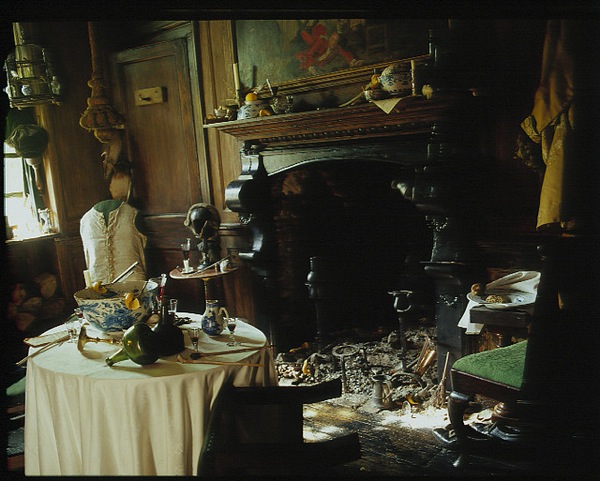
The image used to illustrate this article is from Atlas Obscura’s page on the Globe Museum in Vienna. Now that sounds like a day out, how did I miss that? O why was I so blind? Curse my blinkers!

Posted in Historical Places, Site of the Week, World History | Tagged , , , | Leave a comment

Dogs vs Flying Cars: A surprisingly Georgian night at the theatre

Flying Car Vs Dog

A couple of weekends ago I went to see the touring production of Chitty Chitty Bang Bang at the Bristol Hippodrome. I felt much the same about the show as I did when I saw it on the West End. Although it has some fun moments, it’s lumbered with some distinctly average new songs, and an extremely messy second act. Criminally, the stage production chooses to abandon some of the most enjoyable elements of the film, most notably the secret, murderous hatred between the Baron and Baroness Bomburst, disguised by sickeningly cutesy lovey-dovey language. ‘Chu-chi Face’, the ostensible love song sung by the pair as the Baron tries several ways to murder the Baroness, is a wonderfully ironic highlight of the film. On stage, this side of their relationship is jettisoned, and the Baron becomes merely an overgrown child, pathetically reciprocating the Baroness’s sugary sentiments.

All the same, the stage production remains enjoyable thanks in large parts to its sheer spectacle. The flying car is as bewitching and convincing a piece of stage magic as ever, and gets a huge reaction from audiences. They say nobody leaves the theatre humming the scenery, but in Chitty they’ve given it its own curtain call before they head out into the night.

Another highlight of the show, I must confess, is its cast of capering canines – at times, dozens of dogs fill the stage. I’ve always felt that dogs are under-appreciated thespians. Actors spend years in training, learning not to act, to be the part rather than merely acting it. Dogs get this right off the bat. A dog is a dog, always will be. In Chitty, the dogs seemed to be enjoying themselves far more than many of the chorus, too. And, most excitingly, when a dog’s on stage, you never know quite what’s going to happen. They may run off and on when they’re told, and perform any number of other tricks on cue, but they’re still dogs. They’re not worrying about getting shouted at by the stage manager or the producer complaining to Equity. Professional theatre can get incredibly stale and predictable, so much like a day at the office, that anything that sets that even slightly on edge is always a joy. At the climax of the Chitty, the dog and the flying car appear on stage together. Millions of pounds of development, a whole team dedicated to building the thing, packing it into lorries and keeping it going every night, and somehow, I still found myself staring at the chubby little dog.

Sometimes I wonder if I might not be a bit simple, so it was reassuring to read in The Pantomime Life of Joseph Grimaldi, that the Georgians would be firmly on my side on this one. In this book, Andrew McConnell Stott paints a wonderful picture of the awe-inspiring excess of Georgian theatre in London, as rival playhouses vied to add ever more spectacle to their spectaculars, and draw crowds of hungry theatre-goers. In 1794, the Covent Garden theatre staged a production of the full-blooded romance Lodoiska. Its climax featured a siege on Lovinski Castle by a horde of Tartars. Military extras swarmed the stage, firing rifles and cannon, while real flames erupted eighteen feet high at the back of the stage (frequently threatening to engulf it entirely). The heroine of the piece is trapped in a high tower, surrounded by the flames, prompting the hero to dash across a bridge, scale the tower and rescue the maiden, seconds before carpenters backstage knocked out supports, sending both bridge and tower hurtling towards the stage. One night, one of the carpenters proved rather too keen, scuttling the bridge too early, while the hero was still on it. He fell to the stage, and somehow managed to catch the heroine as she fell with the collapsing tower. When he stepped out of the smoke, with her in his arms, the pair received such a rapturous response from the audience, thinking that this was all part of the show, that they were forced to repeat this new hair-raising climax every night.

Not wanting to be outdone, Sadler’s Wells ripped out its entire under-stage area one season, so that it could be filled with water and used to stage mock naval battles (with children employed to man the ships so as to disguise their miniature scale). Buoyed by Nelson-mania, the venture was a roaring success, and performances continued nightly in the increasingly unsanitary waters.

The Georgians, like me, also had a particular fondness for animal actors, albeit taken to a typically outrageous extreme. One notable hit in 1784 involved Moustache, a dog cast as the star of a play called The Deserter. The plot of this impossibly bizarre piece of theatre centred on Moustache leading his platoon of canine soldiers into battle against their enemies. Frederick Reynolds remembered seeing him,

“in his little uniform, military boots, with smart musket and helmet, cheering and inspring his fellow soldiers to follow him up the scaling ladders, and storm the fort”

That I would pay to see. As did the Georgians, in their droves. The following season was replete with a Noah’s Ark of entertaining animals, from a hare playing the drums to a singing duck, two dancing horses and, Samuel Johnson’s favourite, a pig who could read and tell the time.

Clearly, this was not the ultimate expression of what theatre can achieve, but it is telling that men like Johnson and Sheridan (who managed Covent Garden at this time) had such open attitudes to this type of theatre. Georgian theatre might have been chaotic, hopelessly extravagant, rampantly commercial, often shallow and sometimes desperate, but it was also exhilariting, bold, extremely popular and wildly entertaining. It’s a reminder of how deadening the limits of snobbery can be, and of the joys of a willingess to try anything once.

Further Reading

Posted in 18th Century, Animals, Theatre | Tagged , , , , | Leave a comment

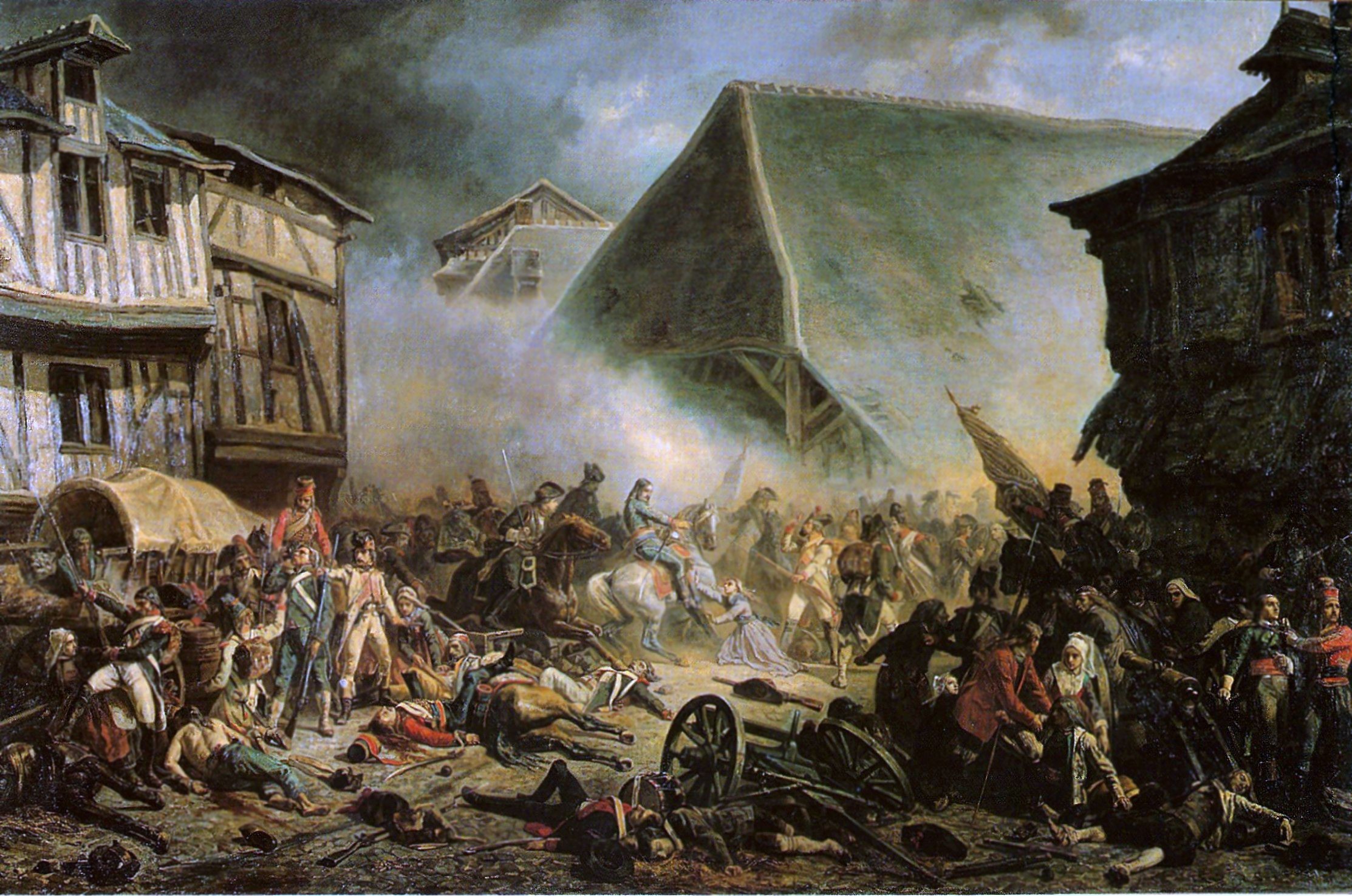
A King of Beasts in Revolutionary Paris

I’ve just started reading the eclectic and lively Georgian London blog, and came across this piece about the menagerie at the Tower of London, which existed in various forms from 1252 until its closure in 1835, at which point its collection of animal inhabitants formed the basis for London Zoo.

The story of the menagerie (once you’ve managed to disable those parts of your brain sensitive to modern notions of health and safety, animal cruelty and basic common sense) is a dizzying carnival of unlikely experiences, which range from the sublimely ridiculous to the ridculously sublime. Picture, for example, the first resident of the menagerie; a polar bear, given as a gift from the King of Norway to the King of England. Although presumably fluffy, small and adorable to begin with (perhaps wrapped in a little bow), the gift soon grew into an almighty, boulder-pawed beast (as polar bears are so wont to do). Too large now for his strolls around the Tower, he was sent with his keeper to swim and catch fish in the river Thames.

This curious incident of the bear and his swim time seems to have set the tone for the menagerie, and as the delightful stories keep coming, the greater a tragedy it seems that there was no historical equivalent of Ben Fogle and Kate Humble to record them all in a sort of proto-Animal Park. Other residents of the Tower menagerie included Old Martin, the bear who put the grizzly back into grizzly bear, a lonely mongoose, monkeys bedecked in fine costumes, a plague of kangaroos (which apparently spread to other parts of England, until it was not at all uncommon to see kangaroos roaming around in parks) an elephant with a penchant for wine and a belligerent, beer-swilling zebra, who by all accounts was a much friendlier drunk.

There were also many Lions in the menagerie, whose chorus of roars at dawn came incongruously to mark the start of the day at the Tower of London. This put me in mind of another lion from another menagerie, whose wretched story is painfully revealing of the tensions and ironies that practically hummed in the air of revolutionary Paris.

This story is told in The Journal of a Spy in Paris During the Reign of Terror, a fascinating document which purports to have been recorded by one Raoul Hesdin (no doubt an assumed name), an English spy working for the French Government during the first half of 1794. No record can be found of anyone of this name in the employ of the government at the time, but the work rings with truth, and it seems safe to say that whoever he was, he was in Paris at the time, and in some position that gave him close access to the Committee of Public Safety, and all the important goings-on in this tumultuous period.

But despite this elevated position, it is the personal perspective offered by the journal that makes it such a fascinating and valuable source. The study of the revolution can so easily get bogged down in valiant attempts to chart and explain the ever-changing, immensely complicated shifts in the political tides, at the expense of an understanding of what it actually felt like to be an individual living through the vast impersonal processes of the Terror, of people’s perceptions of what was happening and where it was all leading, and ultimately what the point of it all was.

It seems that Hesdin once had some enthusiasm for the revolution, and was perhaps even swept up in its very early phases. In the time since then, however, this enthusiasm has clearly softened, waned and ultimately reversed upon itself. By early February 1794, he writes,

I have little heart in such scenes for the compilation of a regular journal; if there were the least chance of my obtaining employment elsewhere or a passport to leave, I would leave this hideous shambles to-morrow. I am here to discover the secrets of a Government which has none, to unriddle mysteries when everything is but too patent, to assign causes to affects when famine, hideous famine, is the cause of everything. At times I console myself with the thought that I am taking part in a piece that will one day be read and re-read on History’s page – if, indeed, all History be not destroyed and the End of all things come.

What seems to pain Hesdin most is the transformation that has taken hold of Paris, a city which once had clearly bewitched and entranced him, in a way that Paris through the ages seems to have had a unique capacity to do.

I walked today under the chestnuts for an hour… The contrast to my youthful recollections of Paris moved me almost to tears. Nothing but the eternal white dust of the streets remains the same…

The ferment of minds in the salons, clubs, and coffee-houses, above all in the streets, was indescribable. People literally lived in the open air those two summers, and in ‘89 at every moment were seen horsemen dashing in with news from the Court or the Assembly at Versailles; orators declaiming on every chair and balustrade on the terrace. Now it is the silence of the grave

He tells us of dance halls banned by the government, but which continued anyway in secret, shifting from place to place each night to avoid detection. He watches as great books and priceless pictures sell for nothing, all vestiges of the past having ‘become objects of derision’. Most chillingly, he one day observes that guillotinings have become so much a part of the day that guards have had to be posted at the scaffolds to stop children from playing on it.

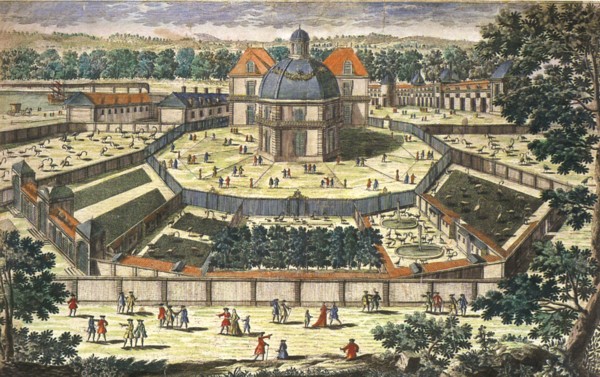
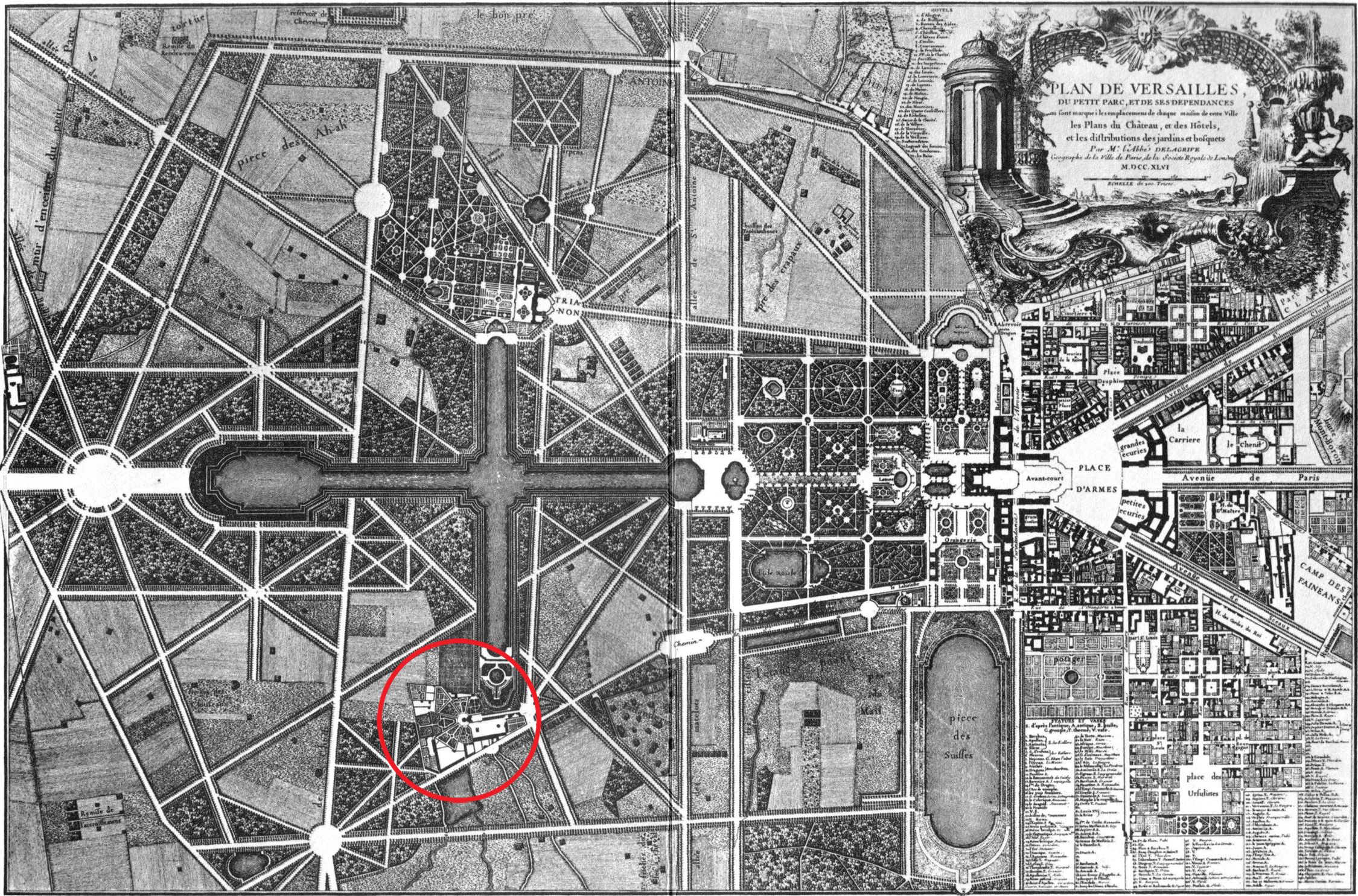
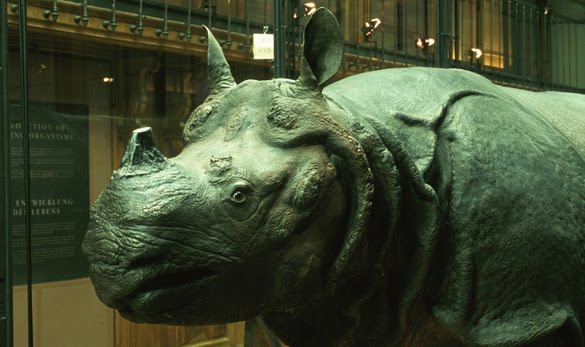
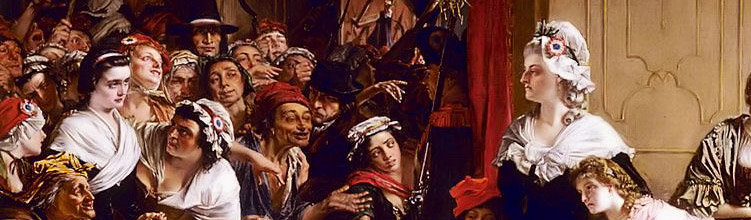
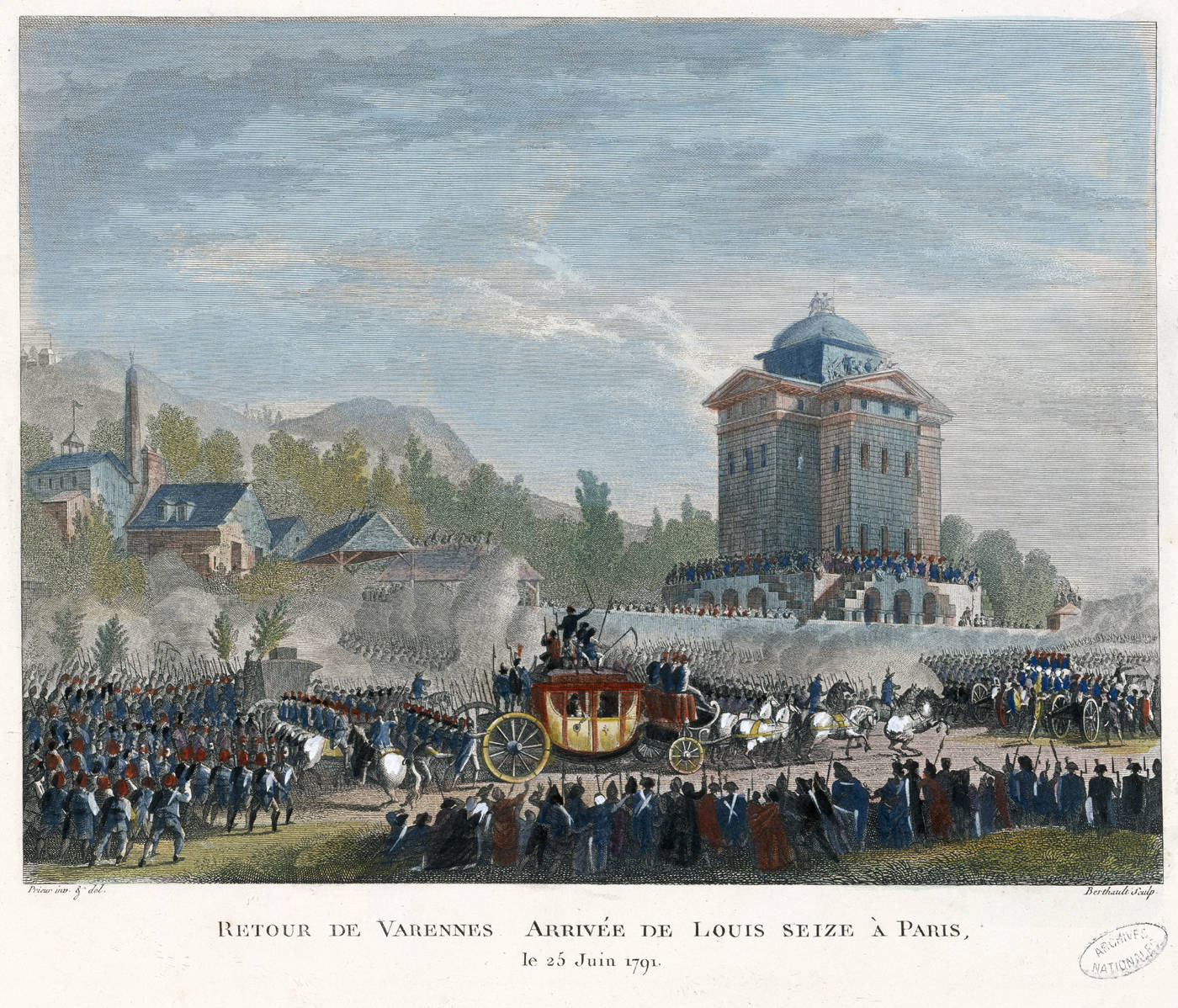
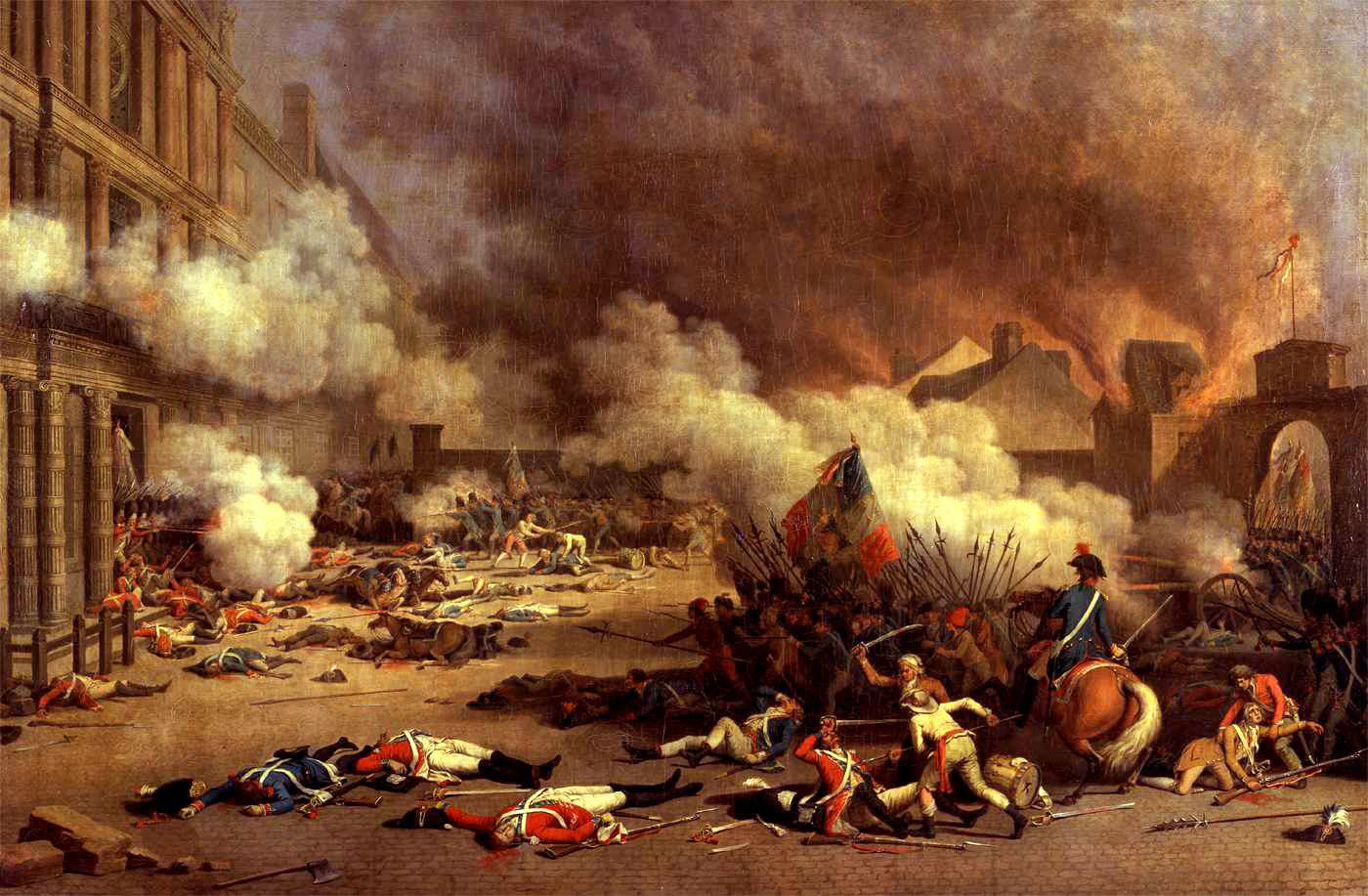
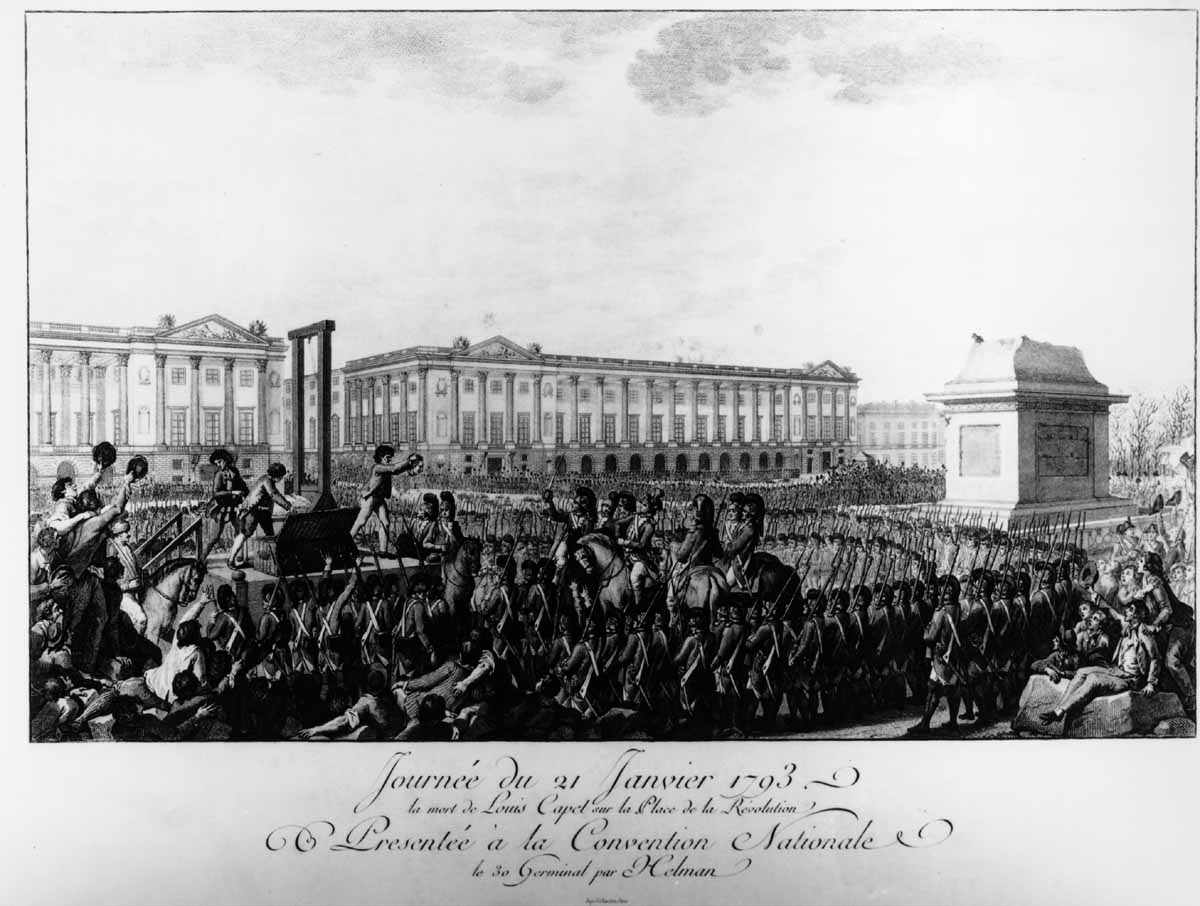
In the middle of all this comes the tale of an old grey lion, once the pride of the menagerie at Versailles, and now caged in the Jardin des Plantes. This was a beautiful botanical garden, marred only, Hesdin tells us, by the presence of strolling flower girls paid by the government to keep a spying eye and keen ear trained on visitors. In this small zoo (which, along with the park, still exists today) lived the Lion, ‘covered with sores and infested with vermin’, a pitiful sight – more mange than mane. For a small fee visitors would be allowed in to see him, and consequently, says Hesdin, he was ‘tormented by the Parisian sans-cullotes because he was king’. This sad image seems to encapsulate both the deep fears and growing frustrations of the people of Paris at this time. The King and Queen were both dead and the revolution had brought immense change, but as people screamed at the lion and tugged his hair, it is tempting to believe they were expressing a powerful sense that the revolution was not yet complete, that it had not done what it was meant to. Its leaders had sought to stoke an ever-burning fear of enemies both within and without, and even the idea of royalty was something that had still to be not only ridiculed but also actively and continuously attacked.

It’s best not to get too romantic about the case of one old Lion, but I’m always searching for moments like this in history, where in one seemingly trivial anecdote everything seems to crystalise, and petty actions have the capacity to reveal what otherwise goes unspoken; ideas and emotions so powerful and complicated that perhaps only unconscious action can express them.

In the end you can interpret the story of the lion in the park in whichever way you like, but through the eyes of Raoul Hesdin, things seem bleakly clear. Shortly before his diary comes to an abrupt and unexplained end, he sums up the world he sees stretching out before him.

Politics seem to be asleep, and all hope of resistance at an end; the yoke is to be eternal; the bloodshed perpetual, if men can be born fast enough to feed the fire.

Further Reading

The photograph used to illustrate this article is by Vincenzo Gianferrari Pini, and was sourced from Wikimedia Commons.

Related Posts with Thumbnails
Posted in 18th Century, Animals, British History, French History, History, London, Paris, Royal History | Tagged , , , , | Leave a comment